
Pay for performance: the assumption nobody has tested
Since 2023, TR2050 has brought together senior reward leaders for panel discussions in Zurich, London, Dubai, Stockholm and Boston, six conversations on how reward needs to change. This series draws them together by theme. Here: the practice reward spends most on, and how little evidence sits underneath it.
The question behind the question
When the Dubai panel turned to pay for performance in 2024, our moderator, Ben Shenoy, visiting professor at the London School of Economics, set it up with an inconvenient piece of arithmetic: the average merit increase of two to three per cent doesn’t align with research suggesting that motivating behaviour takes something closer to seven to ten per cent.
Fermin Diez, total rewards expert and adjunct professor at the National University of Singapore, went further and questioned the foundation itself: “I think one of the biggest assumptions that we have in the entire realm of rewards is that pay for performance works. And I know as I say this, anybody listening to this video is going to say, but of course it works. What are you talking about?”
He built the case in three parts. First, the annual cost to goodwill: “What is the one thing that is guaranteed to upset our employees at the end of the year? Pay for performance is the one thing. Merit increase, bonus time, it is guaranteed.”
Second, what the profession does with the feedback it already receives. Employees say plainly in engagement surveys that they are dissatisfied with pay, and reward explains it away on the grounds that people always want more. His comparison was with a marketing function that decided its customers’ views could be discounted: “imagine if our marketing department surveyed our customers and our customers said something along the lines of… our customers always want better quality for lower price, don’t listen to that. But when our employees say that they… don’t feel satisfied with their pay, we completely dismiss what they have to say to us.”
Third, the mechanics. Setting meaningful individual KPIs across an entire organisation is difficult, and the cycle is unforgiving: a target set one year is assessed the following February, “that’s almost a year and a half later, and everybody has to live with that”. For a salesperson or a software engineer that may work. For an analyst in compensation, less so. “We know this to be a problem… we cover it up with this whole mantle of pay for performance and we make people upset.”
Then the point that should trouble a profession that talks about evidence. Which mix works better, 80:20 or 70:30? Performance shares or stock options? Three-year or five-year vesting? “What exactly would comprise a way to pay that we know that’s backed with analytics drives better company? And… I have yet to see any writing, any company, anyone that can tell me I’ve tried this and I’ve tried that and this works. So, we continue to do rewards and pay for performance with no data, which is scary.”
The experiment
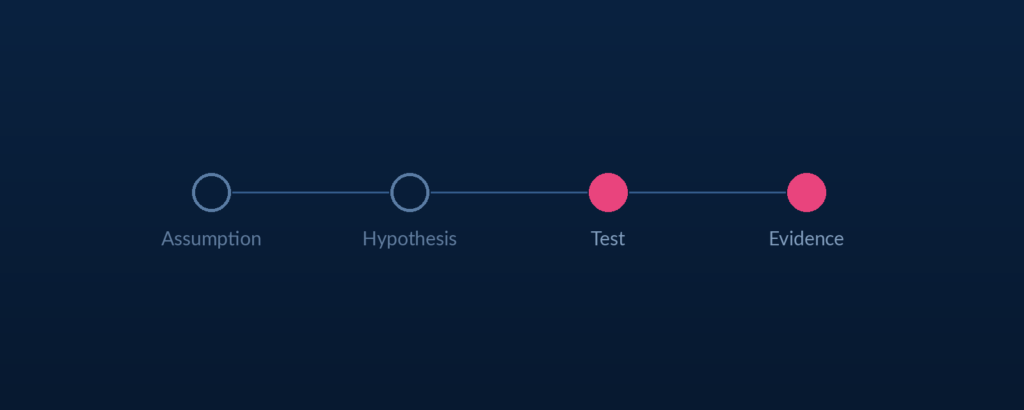
His proposal was deliberately small enough to be possible: “Can we experiment? Six months, a year. Maybe just one department, maybe just HR, where we do away with bonuses for a year. Just pay everybody, calculate what their target bonus is going to be, add it to their base for a whole year and see what happens.”
The fear it tests is rarely stated out loud: “we’re so afraid that if we take away the bonus, performance will collapse”. His counter-observation was about how people actually behave: “I don’t think there’s an HR person in the world that wakes up any particular day thinking, what am I going to do today to maximise my bonus at the end of the year.” For a salesperson, or for an executive whose incentives track share price, the calculation is different, which is exactly his point about the nature of the work rather than the nature of people.
His hypothesis was that such an experiment would show “no loss of performance with increased attraction and increased retention”, and his framing of the ask was modest: “I’m not saying this is better. I’m saying go try, experiment, pilot and then make up your own mind with your own company data.”
The realism
Mariia Lytvyn, then Global Head of Total Rewards at GFG Alliance, supplied the constraint any such pilot runs into. Take a salary bill of $10 million with target bonuses averaging 25 per cent: converting that to fixed pay means injecting another $2.5 million into ongoing employment cost, permanently. “So, it’s not necessarily working for all organisations.” Variable pay also does something for the balance sheet that fixed pay cannot, preserving liquidity until the year’s invoices are paid and sales closed.
Fermin’s response was that the benefits accrue elsewhere: better attraction and lower attrition also help cash flow, and organisations already budget variable pay above target, so the assumed saving is smaller than it looks.
Pascale Saar-Navile, Director of Group Performance and Reward at AIA, reframed the terminology rather than the mechanics. “The terminology pay for performance is tricky. What is performance?” Her preference is to talk about “rewarding impacts for innovation and productivity rather than performance, because we all can just go through our to do list. But does that to do list create an impact or innovation?” Alongside it she put two conditions: alignment to longer-term strategy, which she acknowledged is “not an easy undertaking”, and communication, because “if people understand the performance and rewards framework and the incentive outcomes that they get, I do believe that that creates an understanding”.
Nancy Gleason, Professor in Practice at New York University Abu Dhabi, added an observation that has aged interestingly: objectives and key results are increasingly being drafted by ChatGPT, “both the reviewer and the employee”, and in her view that is “not necessarily a bad thing because they’re not particularly wonderful anyway”. Her suggested direction of travel is to align objectives with learning outcomes, and to reward learning strategies rather than outputs alone.
The same doubt, in other rooms
In London that same year, Dominic Cole-Morgan, Group Reward Director at WPP, arrived at a narrower version of the question and argued both sides of it honestly. On junior populations: “I actually wish I had the question, should we just get rid of bonuses for junior people? I honestly wonder… how useful bonuses are for very junior employees. How much time does it take managers to be tracking performance and this differentiation of pay, and it’s a few dollars here and a few dollars there, and employees getting a very bad feeling that they’re receiving a very bad message, and then the impact on their engagement.” His summary of the process was blunt: “we put managers and employees in this huge process and sort of the variance is minute sometimes.”
And yet he defended what incentives communicate: “we have incentive plans for a reason. We’ve been building all our lives. We have a view that they actually are important, that bonus plans communicate something about what the organisation is going to reward.”
Peter Newhouse, a global reward advisor, pointed at the absence that makes all of this so hard to settle. In his description of how the reward role might evolve, the job becomes one of observing what works and coaching others towards it, “because there must be different ways of paying people that either work or they don’t work, if you’re trying to improve performance. What is it that’s effective and what isn’t?”
In Stockholm in 2024, Fermin aimed the same doubt at merit pay specifically, arguing that the data might show merit “isn’t the biggest driver of performance, and perhaps it doesn’t do much at all, a lot less than you think”. His diagnosis of why that goes unexamined applies to the whole theme: “we’ve lived under these assumptions for so long that we think they’re true.” Max Paping, total rewards expert and adviser to TR2050, added the practical obstacle: the proving has to be done “not only to ourselves, but also senior management”.
From argument to evidence
By 2026, the Zurich panel was discussing tests that members had actually run rather than tests they thought someone should. Uwe Kilian, Vice President of Compensation, Benefits, Performance and Labour Relations at Essity, described taking the first step: “you’re a bit scared you might oversimplify, you’re a bit worried… it might look too simple, the answer is too simple.” What he took from it was the unexpected: “what comes out of it is often quite surprising, so you just get insights that you weren’t expecting, and the insights you don’t expect are the most valuable ones.”
His own test looked at the link between merit and performance or sales outcomes, and produced something nobody had gone looking for. “All of a sudden popped in leadership into this whole equation, and… we weren’t expecting it, we started to look at it, and now we’re going to investigate it to see what is the impact, actually, of leadership on… real sales outcomes for the organisation.”
Alex Kaufmann, Global Head of Reward at Medartis, identified the assumptions most in need of that treatment: “the assumptions that we have today in and around the merit cycle, or how merit cycle impacts performance.” She also described the discipline that keeps such work useful, which is a willingness to stop: on one topic the group concluded it had reached a dead end and that its energy was better spent elsewhere.
Uwe Kilian drew the distinction that separates this from analytics as usually practised: it is about not using data to make decisions… but also use science. Reward’s instinct is to assume that more data produces better decisions. Testing does something different, because it establishes cause and effect rather than correlation, and it requires being willing to be wrong.
Raluca Ciliacu-Hetzer, Senior Vice President for HR and Global Total Rewards at Barry Callebaut Group, made the case for why pilots are the practical route into a subject this sensitive. Reward is emotional and heavily stakeholdered, which is what makes it so hard to change. Tests “are a way to open the door”, and getting them off the ground takes judgement as much as nerve: knowing “where do you start intervening, what could move the needle, and how can I start doing that without creating too much friction”.
What it adds up to
None of the panels concluded that incentives should be abolished, and that was never the argument. What they established, in four cities over three years, is narrower and harder to dismiss: reward’s most expensive and most contested practice rests on assumptions the profession has never systematically tested, the cost of not testing them is paid every year in employee trust, and the barrier to testing them is not technical.
As Fermin Diez put it, the invitation is not to accept a conclusion but to go and find your own: go try, experiment, pilot, and then make up your own mind with your own company data.